


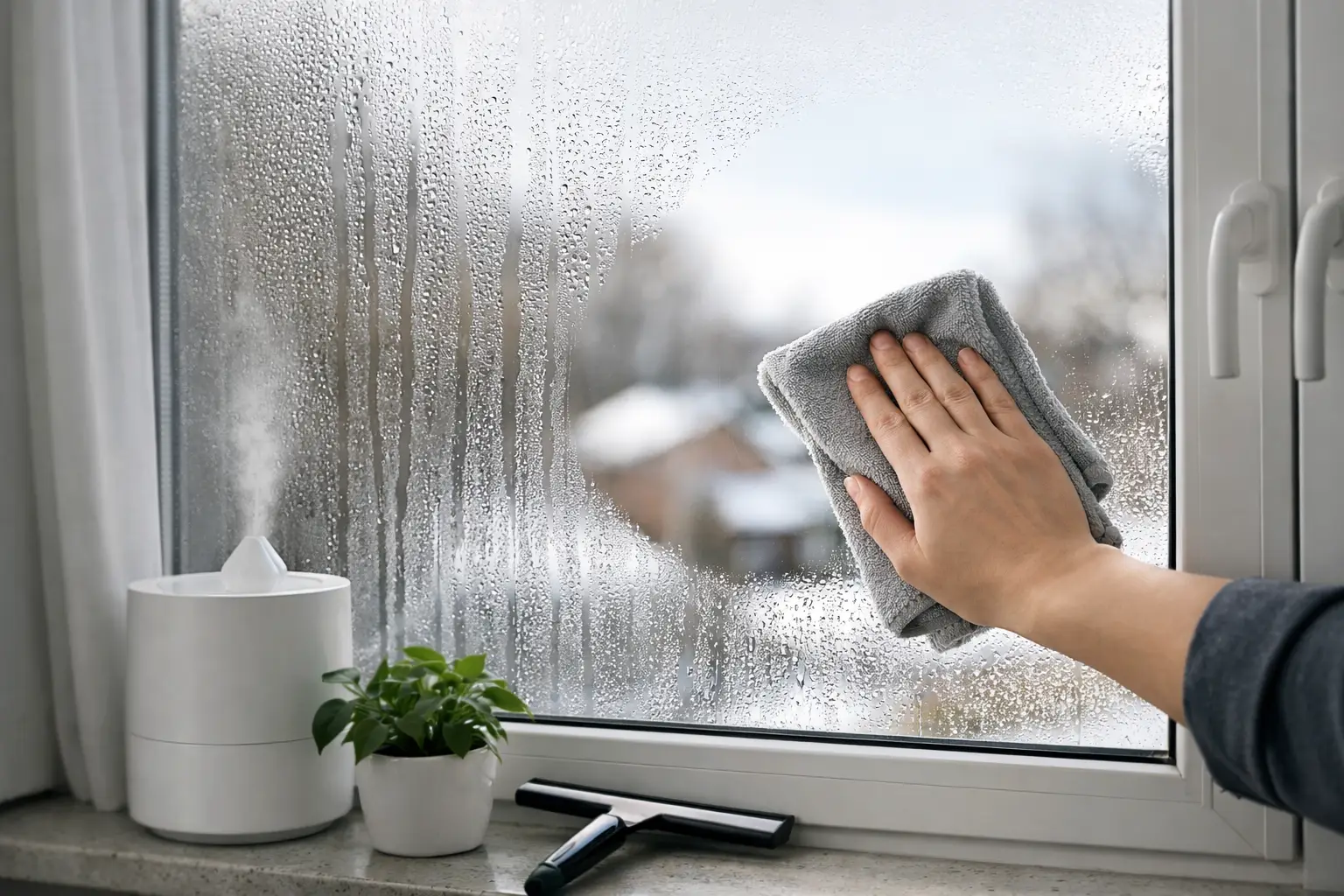
A wet windowsill on a cold morning is more than a nuisance. If you are trying to stop window condensation indoors, that moisture is your home telling you that warm, humid indoor air is meeting a colder glass surface. Left alone, the water can stain wood trim, damage drywall, encourage mildew, and make an older window problem harder to ignore.
In Texoma, condensation often shows up during quick winter temperature swings, when homes are closed up and heaters are running. The good news is that many cases improve with better moisture control and airflow. If the issue keeps returning, though, your windows may be part of the problem.
Why Window Condensation Happens Indoors
Indoor air holds moisture from everyday living. Cooking, showering, laundry, running a humidifier, and even breathing all add water vapor to the air. When that warm air touches a cold windowpane, it cools quickly and releases moisture as droplets – much like a cold drink sweating on a warm day.
A little condensation around the edge of a window during an unusually cold spell does not automatically mean the window has failed. But heavy moisture that collects every morning, runs down the glass, or leaves the sill damp is a sign that the balance between indoor humidity, airflow, and window insulation needs attention.
Older single-pane windows are especially prone to condensation because the interior side of the glass gets cold fast. Drafty frames, worn weatherstripping, damaged seals, and poorly fitted windows can make the problem worse. Better-performing replacement windows keep the indoor glass surface warmer, which reduces the chance that moisture will form.
First, Make Sure the Moisture Is on the Right Side
Before changing anything, look closely at where the water is forming. Moisture on the inside surface of the glass is indoor condensation. This is the issue homeowners can often improve with ventilation, humidity control, and more efficient windows.
Moisture on the outside surface of a window is usually different. It can happen on humid mornings when the outdoor air reaches the cool exterior glass. In many cases, that actually means the window is insulating well enough to keep indoor air conditioning from warming the outer pane. It usually clears as the day warms.
Fog, haze, or droplets between two panes of glass are a separate concern. That generally points to a failed insulated-glass seal. No amount of wiping, ventilation, or dehumidifying will remove moisture trapped between the panes. A window professional can help determine whether a glass repair or full replacement makes the most sense.
Lower Indoor Humidity Without Making Your Home Uncomfortable
The fastest way to reduce condensation is to reduce the amount of moisture in the air. During cooler weather, many homes do well with indoor relative humidity around 30% to 50%. The right number depends on outdoor temperatures and your home. When it is very cold outside, a lower humidity setting may be needed to prevent condensation on less efficient windows.
A simple indoor hygrometer can show whether humidity is running high. If it is, start with the common moisture sources. Run bathroom exhaust fans during showers and for a while afterward. Use the kitchen range hood when boiling water or cooking. Make sure a clothes dryer vents outdoors, not into an attic, garage, or crawlspace.
If your home feels humid even when those basics are covered, a portable dehumidifier can help in the rooms where moisture is most noticeable. It is a practical short-term tool, especially in bathrooms, laundry areas, bedrooms, and rooms with several windows. Keep in mind that a dehumidifier treats the symptom. It does not correct a leaky window, failed seal, or cold single-pane glass.
Humidifiers deserve a close look as well. They can make winter air more comfortable, but setting one too high can create water on windows. If you see daily condensation, turn the humidifier down or pause it for several days and watch for a change.
Improve Airflow Around the Glass
Still air near a window cools down and holds moisture against the glass. Improving circulation can make a noticeable difference, particularly in bedrooms and rooms with heavy curtains.
Open blinds and curtains during the day so warm room air can reach the window. Avoid closing thick drapes tightly over the glass overnight if condensation is a regular issue. Move furniture that is pressed against a window or blocking a supply vent. In some rooms, simply opening interior doors or running a ceiling fan on a low setting helps air move more evenly.
Check the condition of your HVAC system, too. A clean filter and properly operating system support healthier airflow throughout the home. If one room stays colder than the rest of the house, it may need an HVAC evaluation in addition to window attention. Condensation is sometimes a whole-home comfort issue, not just a glass issue.
Remove Existing Water Before It Damages Trim
Do not let condensation sit on wood, drywall, or flooring. Wipe down the glass, sill, and lower frame with a dry absorbent cloth when you notice water. If water has pooled in the track, clean it out so dirt and moisture do not build up together.
Then inspect the surrounding area. Peeling paint, soft wood, dark spotting, a musty smell, or swollen trim suggests the moisture has been present for a while. Address those signs early. Surface mildew may be cleanable, but repeated water exposure can lead to repairs that cost more than solving the condensation source.
Avoid sealing up drainage openings in window tracks. Those small openings are designed to allow incidental water to escape. Caulk belongs around appropriate exterior gaps and trim details, not over the parts of a window meant to drain.
When You Need More Than Humidity Control
If you have lowered humidity, improved airflow, and still see frequent indoor condensation, take a closer look at the windows themselves. Replacement becomes worth considering when the windows are old, single-pane, drafty, difficult to operate, visibly damaged, or showing failed glass seals.
Modern vinyl replacement windows with insulated glass, quality weatherstripping, and a custom fit can help keep interior glass warmer during cold weather. That does not mean a new window can overcome extreme indoor humidity on its own. A house with several long showers, an unvented dryer, and a high-setting humidifier can still create condensation. But energy-efficient windows reduce one major part of the equation: the cold surface where moisture collects.
For homeowners comparing options, pay attention to more than appearance. Double-hung windows can be a familiar choice for many rooms, while casement and awning windows can offer strong compression seals when closed. Picture windows provide broad views with no operable sash, and sliding windows work well where space and function call for them. The best style depends on the opening, ventilation needs, budget, and the condition of the existing window.
Professional measurement and installation matter just as much as the product. A window that is not properly sized, insulated, and sealed around the opening can still allow drafts and uneven temperatures. Custom-sized replacement windows help avoid the gaps and shortcuts that can come with trying to force a standard-size unit into an older opening.
A Practical Plan to Stop Window Condensation Indoors
Start with a few days of observation. Check your indoor humidity, note which rooms are affected, and see whether condensation appears after showers, cooking, laundry, or overnight. Wipe water away promptly, use exhaust fans consistently, and open window coverings enough to allow air to circulate.
If the moisture improves, keep those habits in place. If it continues on the same older or drafty windows, or if you see fog between the panes, it is time for a straightforward window assessment. A local contractor can inspect the condition of the frames, glass, seals, and installation, then explain practical options without pushing you into more work than your home needs.
At Budget Windows of Texoma, homeowners can get clear guidance on custom-fit, energy-efficient replacement windows, professional installation, financing options, and warranty coverage. The goal is not just a better-looking window. It is a more comfortable home with fewer cold spots, less moisture risk, and a project that fits the budget.
A dry windowsill is a small detail, but it protects the parts of your home that are expensive to repair. Start with humidity and airflow, then let the condition of your windows guide the next step.


